
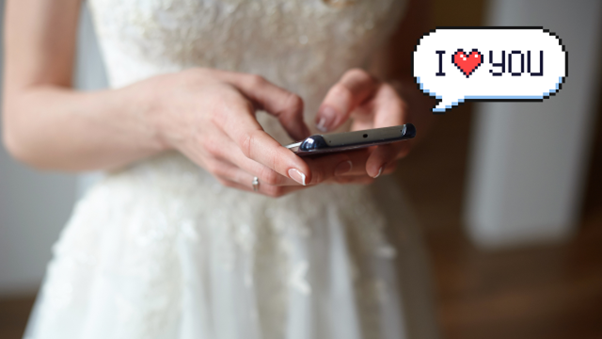
Growing Number Of Americans Marrying Phones To Bypass “No Devices In Bed” Advice
Experts report a rise in smartphone marriages as users look for loopholes around “no devices in bed” advice.

Health experts confirmed that a growing number of Americans are formally marrying their smartphones to sidestep long-standing medical advice warning against using electronic devices in bed.
According to researchers at the Happy Sleep Health Institute, the trend has emerged as a practical workaround for patients who were repeatedly advised to remove phones from the bedroom.
“The medical advice is not to have devices in bed,” said Dr. Kyle Willis, a behavioral health specialist consulted on the matter. “It doesn’t say anything about spouses though.”
The practice reportedly began among individuals who felt conflicted about their phone use but unwilling to make abrupt lifestyle changes. By legally recognizing their device as a partner, users say the relationship becomes exempt from common sleep hygiene restrictions.
“I tried leaving my phone in the kitchen,” said one man, “but I kept wanting to text it all night. That was a sign I should probably propose.”
Asked if he chose a meaningful location to pop the question, he nodded. “Yeah. I took her to the place where we spend the most quality time, the bathroom.”
As part of the marital arrangement, many human participants report engaging in nightly rituals such as placing the phone gently on the pillow, whispering notifications aloud, and checking one last time “just in case.” They described feeling more relaxed knowing their device was close, charged, and legally entitled to remain there.
“I don’t see it as scrolling,” said one woman. “It’s a healthy physical touch.”
The trend has sparked a surge in minimalist ceremonies, often officiated by friends who “know how much the phone has been there for their buddy.” Some couples exchange vows promising lifelong updates, loyalty, and uninterrupted access.
Critics have raised concerns that the practice reinforces unhealthy attachment patterns. Sleep experts counter that the attachment already exists. “This isn’t creating a dependency,” Willis said, “it’s simply acknowledging one.”
– Ella Lane